Essential Fishing Knots
A bad knot is the #1 reason fish are lost. These six knots cover every Florida connection — braid to leader, line to hook, line to line.
Quick Reference
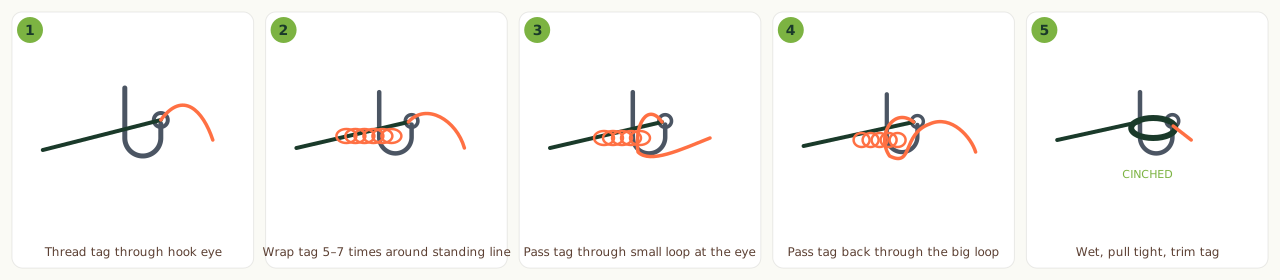
1. Improved Clinch Knot
Use for: Tying line directly to hooks, swivels, or lures. The first knot every angler should learn.
- Thread 6 inches of line through the hook eye
- Wrap the tag end around the standing line 5–7 times (5 for heavy line, 7 for light)
- Pass the tag end through the small loop between the hook eye and the first wrap
- Pass the tag end through the big loop you just created
- Wet the knot with saliva, then pull tight slowly. Trim tag end.
Florida tip: Works great with monofilament and fluorocarbon. For braid, use the Palomar instead — braid's slick surface causes clinch knots to slip.
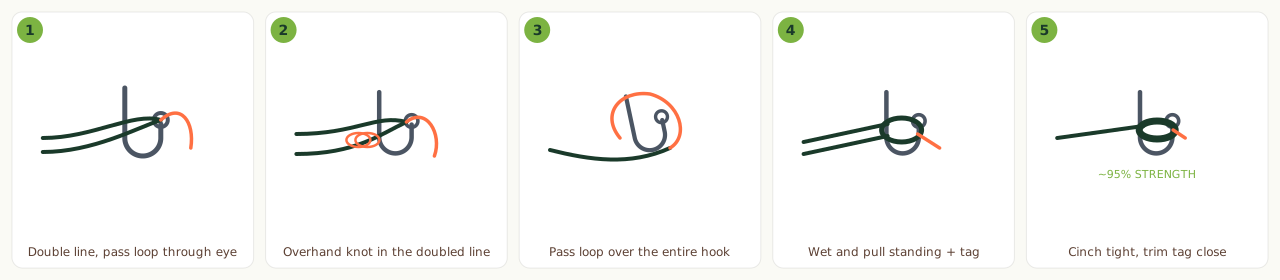
2. Palomar Knot
Use for: Hook/lure to line. The strongest simple knot. Best knot for braided line.
- Double 6 inches of line and pass the loop through the hook eye
- Tie a simple overhand knot with the doubled line (don't tighten)
- Pass the loop over the entire hook/lure
- Wet and pull both the standing line and tag end to tighten
- Trim tag end close
Why it's the strongest: The line wraps twice through the eye and the knot tightens symmetrically — no weak point. Tournament anglers use this knot more than any other.
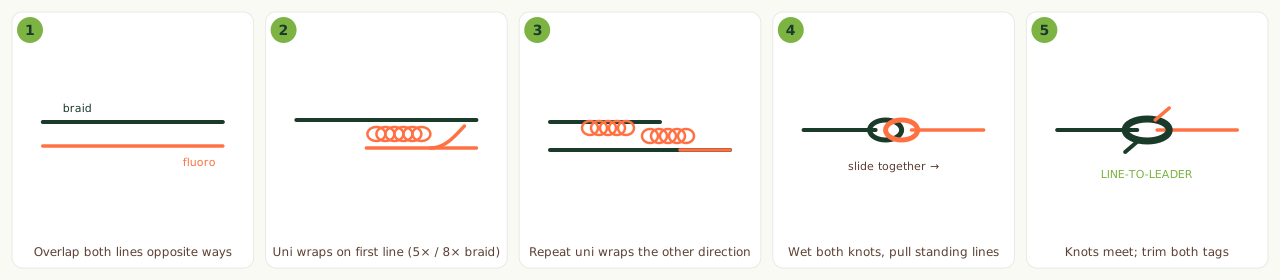
3. Double Uni Knot (Line to Leader)
Use for: Connecting braid to fluorocarbon leader. Essential for Florida fishing where clear leaders fool line-shy fish in clear water.
- Overlap 6 inches of both lines, pointing in opposite directions
- Make a loop with the first line. Wrap the tag end through the loop and around both lines 5 times (8 times if braid). Pull tight.
- Repeat with the second line in the opposite direction
- Wet both knots and pull standing lines in opposite directions until the two knots slide together
- Trim both tag ends
Florida tip: Use 8 wraps on the braid side and 5 on the fluoro side for braid-to-fluoro connections. The extra wraps prevent braid slippage.
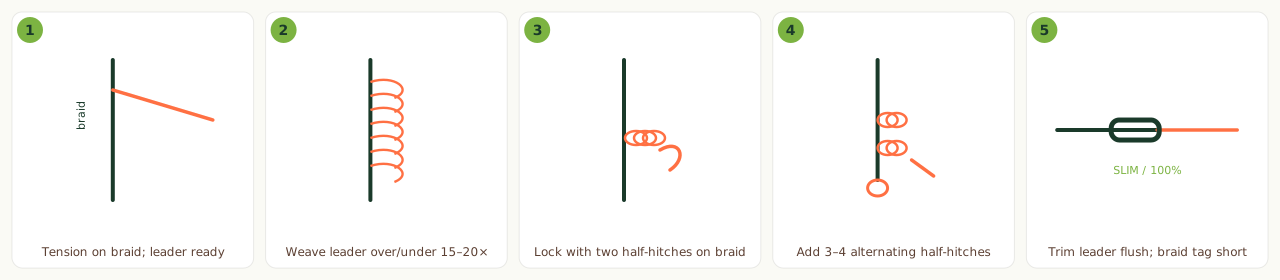
4. FG Knot (Advanced Line to Leader)
Use for: Braid to leader when you need the slimmest possible connection that passes through rod guides. The strongest braid-to-leader knot that exists.
- Keep tension on the braid (hold between your teeth or use a clip)
- Weave the leader over and under the braid in alternating wraps — 15–20 wraps
- Lock with two half-hitches on the braid
- Add 3–4 half-hitches alternating direction, moving down the braid
- Trim the leader tag flush and the braid tag short
Worth learning: Takes practice (tie it 20 times before fishing). But the flat profile passes through guides like butter — meaning longer casts and no "knot bump" snagging. Essential for serious inshore and offshore Florida fishing.
5. Non-Slip Loop Knot
Use for: Lures that benefit from free movement — topwater plugs, jerkbaits, swim jigs. The loop lets the lure swing and dart naturally instead of being locked rigid.
- Tie a simple overhand knot in the line, 10 inches from the end. Don't tighten.
- Pass the tag end through the lure eye
- Pass the tag end back through the overhand knot (entering on the same side it exited)
- Wrap the tag end around the standing line 4–5 times
- Pass the tag end back through the overhand knot again. Wet and tighten.
Florida use: Essential for topwater snook fishing. A Zara Spook or TopDog on a loop knot walks 50% better than on a clinch knot. The loop also improves jig action on flats.

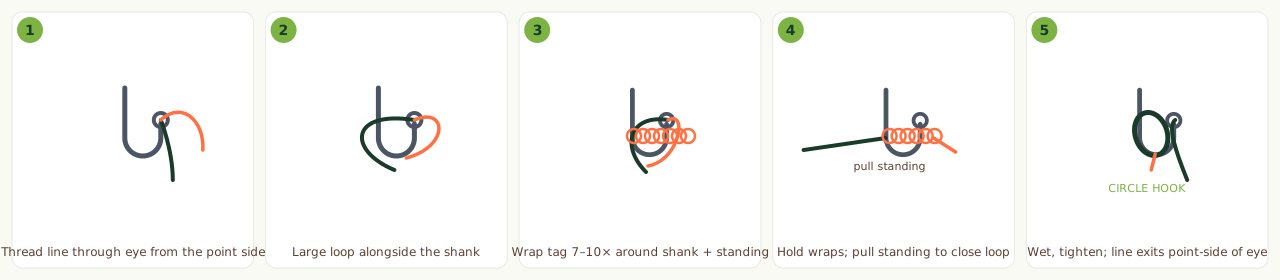
6. Snell Knot
Use for: Circle hooks. A snelled circle hook rotates properly on the hookset, catching the corner of the mouth for clean catch-and-release. FWC requires circle hooks for many reef species.
- Thread the line through the hook eye from the point side
- Make a large loop alongside the hook shank
- Hold the loop against the shank and wrap the tag end around both the shank and the standing line 7–10 times, working toward the bend
- Hold the wraps and pull the standing line to close the loop
- Wet and pull tight. The line should exit from the point side of the eye.
Why it matters: A circle hook tied with a regular knot can rotate incorrectly and gut-hook the fish — defeating the purpose. A snell forces the correct rotation, resulting in 90%+ corner-of-mouth hookups.
💡 Universal Knot Rules
- Always wet knots before tightening — friction from dry tightening weakens line by 30–50%
- Pull knots tight slowly and firmly — quick yanks cause kinks that fail under load
- Test every knot — give it a hard pull after tying. Better to break it now than on a fish
- Re-tie after every fish — Florida fish have rough mouths (snook gill plates, tarpon sandpaper jaws) that abrade leader material
- Trim tag ends close — long tag ends collect grass and spook fish in clear Florida water
😟 Get Your Knot Kit
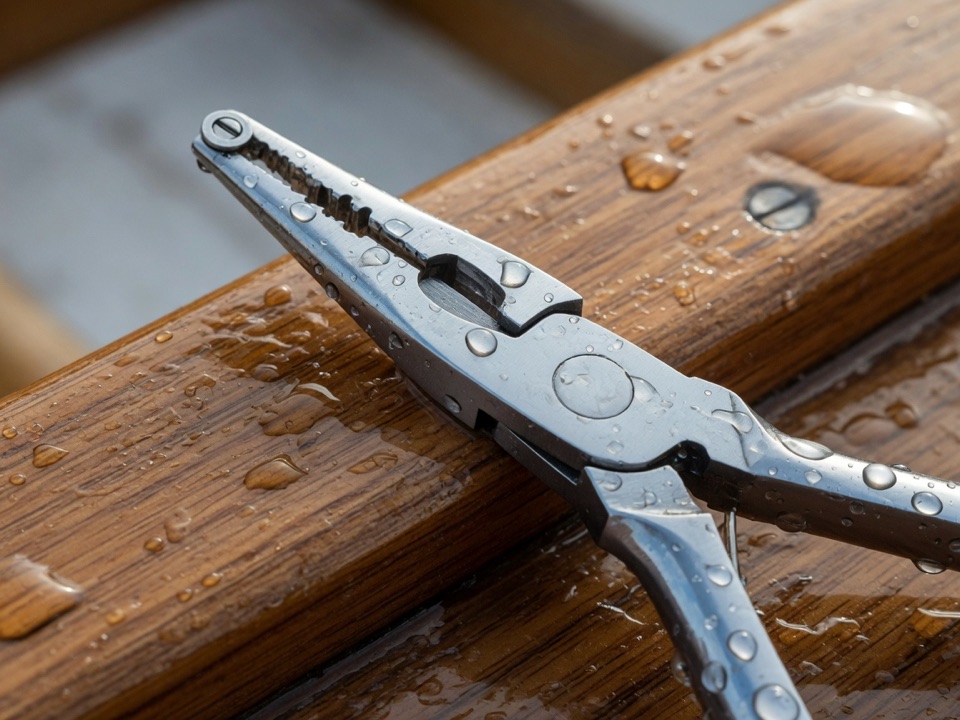 Bubba Long Nose Pliers 6.5 inch, stainless jaws. Split-ring tool, cutters, and a crimper. Get this
 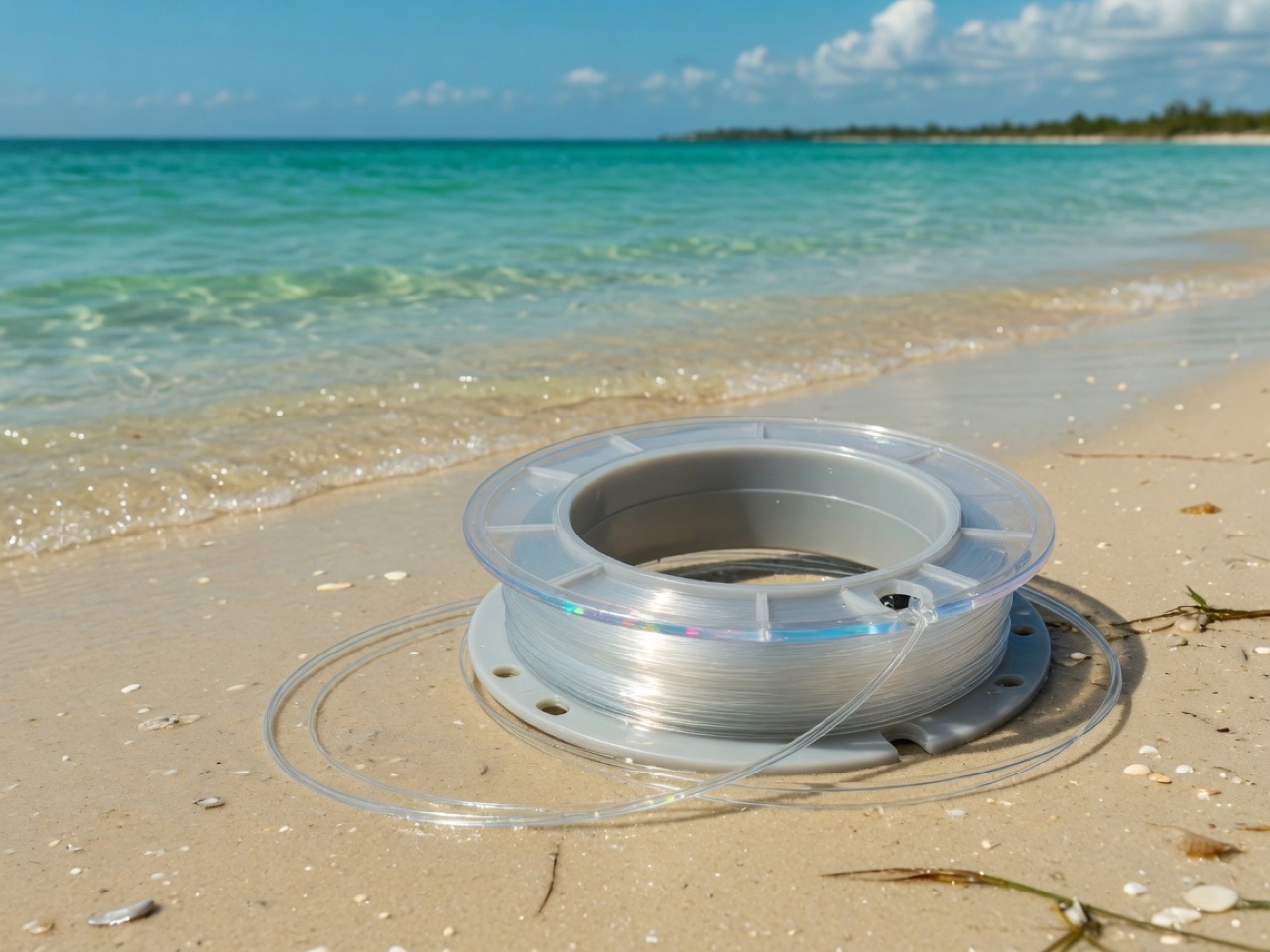 Fluorocarbon Leader 20–30 lb Low-visibility for leader-shy species Get this
 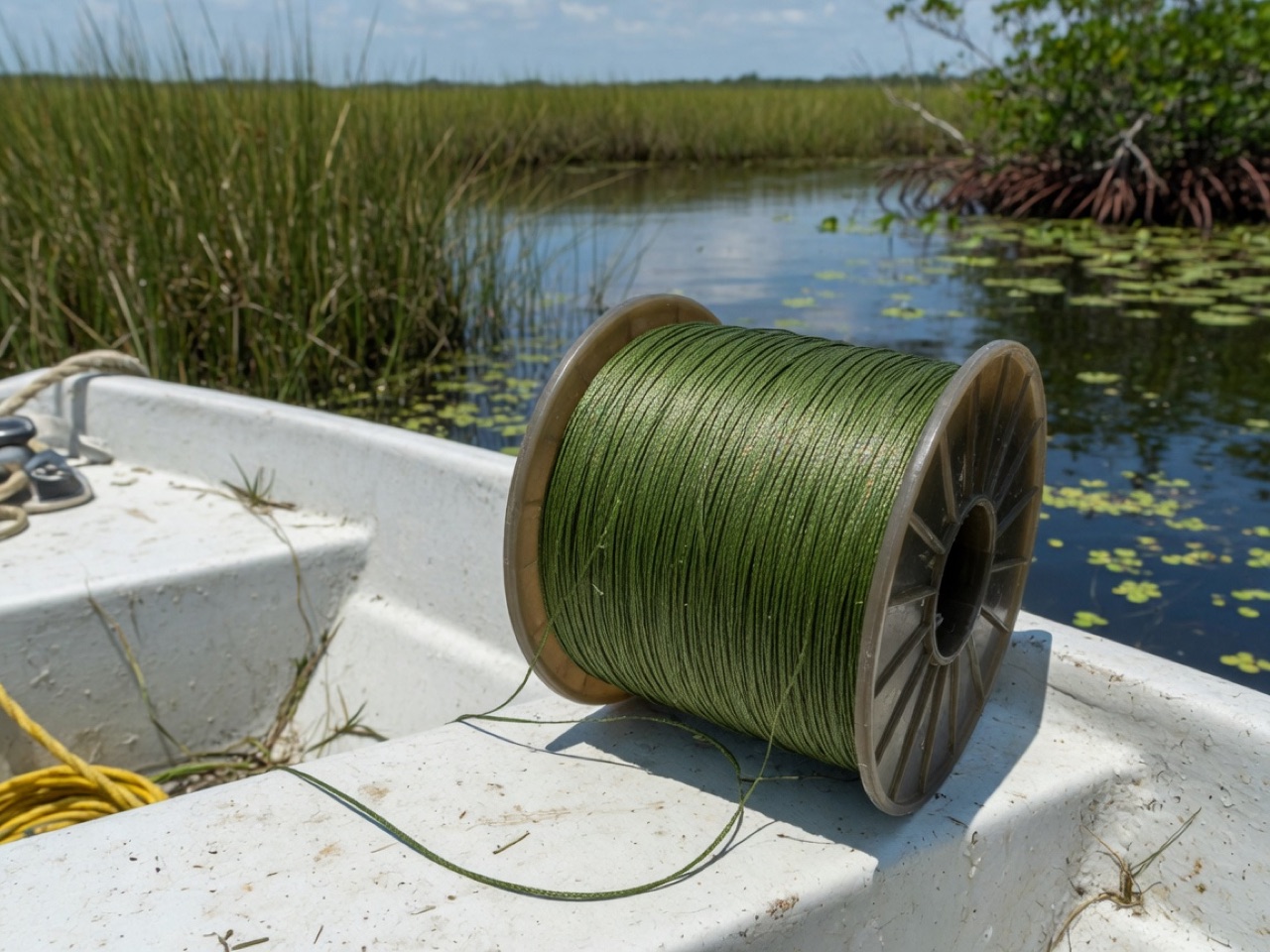 Braided Line 20 lb Pair braid mainline with fluorocarbon leader Get this
 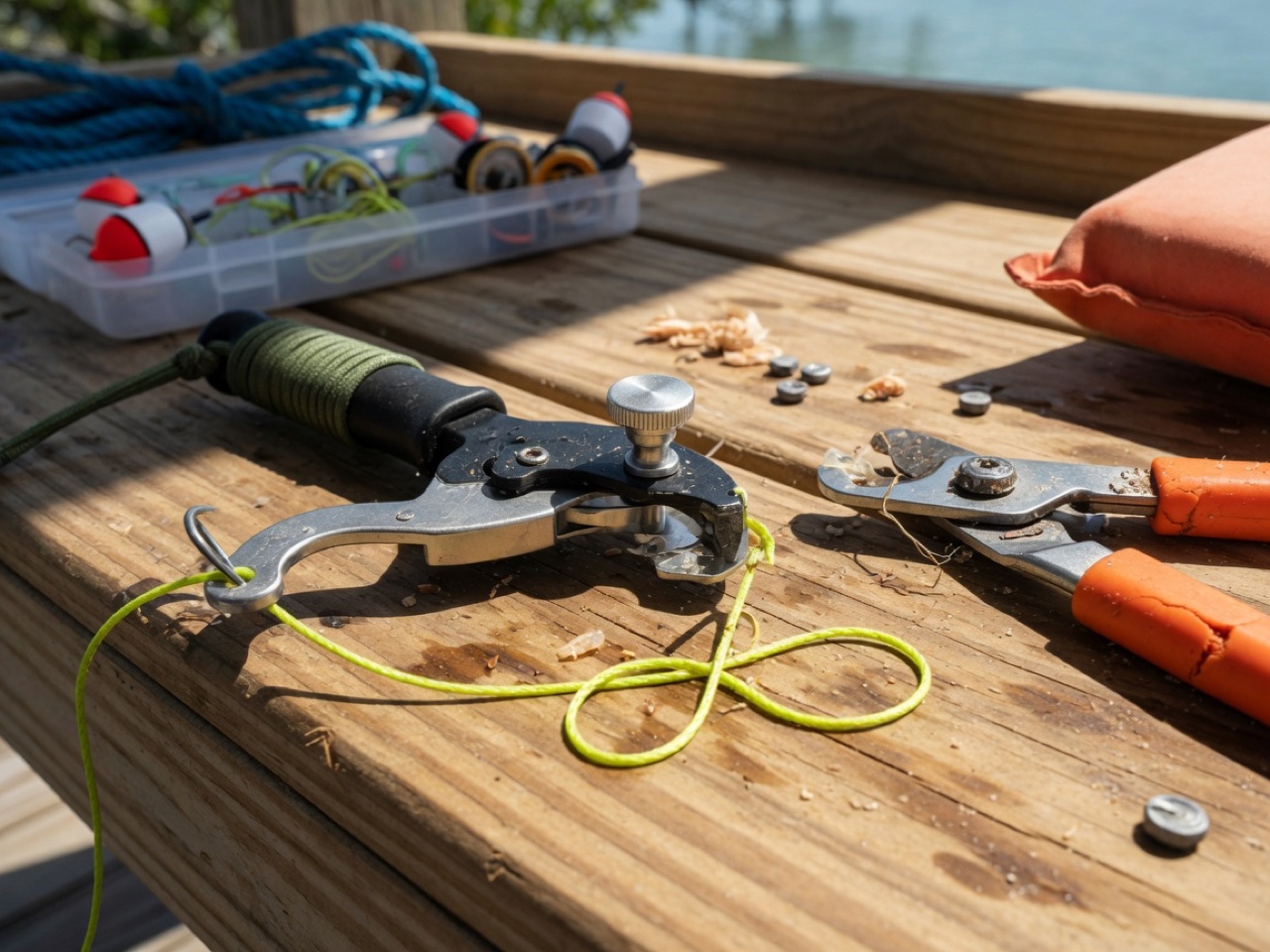 Knot Tying Tool Makes Palomar and loop knots effortless Get this Line Cutter / Scissors Braid needs a cutter — regular scissors won't work Get this
 Product links are Amazon affiliate links. As an Amazon Associate, we earn from qualifying purchases — at no extra cost to you. Learn more →